2026 Cape Verde National Football Team: 5 Defining Insights
The Cape Verde national football team is the men’s representative side of Cabo Verde, a West African island nation competing through the Confederation of African Football (CAF). Known as the Blue Shar...

2026 Cape Verde National Football Team: 5 Defining Insights
The Cape Verde national football team is the men’s representative side of Cabo Verde, a West African island nation competing through the Confederation of African Football (CAF). Known as the Blue Sharks, the team combines a disciplined defensive structure with technically gifted players developed in Portugal, France, the Netherlands, and other European leagues. Cape Verde reached the Africa Cup of Nations quarter-finals in 2023 and secured qualification for the 2026 FIFA World Cup, the first World Cup appearance in its history. Its football federation, the Federação Cabo-verdiana de Futebol, has built a competitive side from a small population and wide diaspora. The practical takeaway is simple: assess Cape Verde through its shape, transitions, and away performance rather than reputation alone.
Cape Verde is not the sort of national team that arrives with a marching band and a century of mythology behind it. There is no convenient pile of World Cup memories to lean on, no ancient rivalry that makes every statistic glow brighter than it deserves. What exists instead is more interesting: a country of roughly half a million people, spread across Atlantic islands, producing a side capable of troubling established African powers. I have watched enough supposedly “small” teams punish lazy assumptions to know that the label usually says more about the observer than the football.
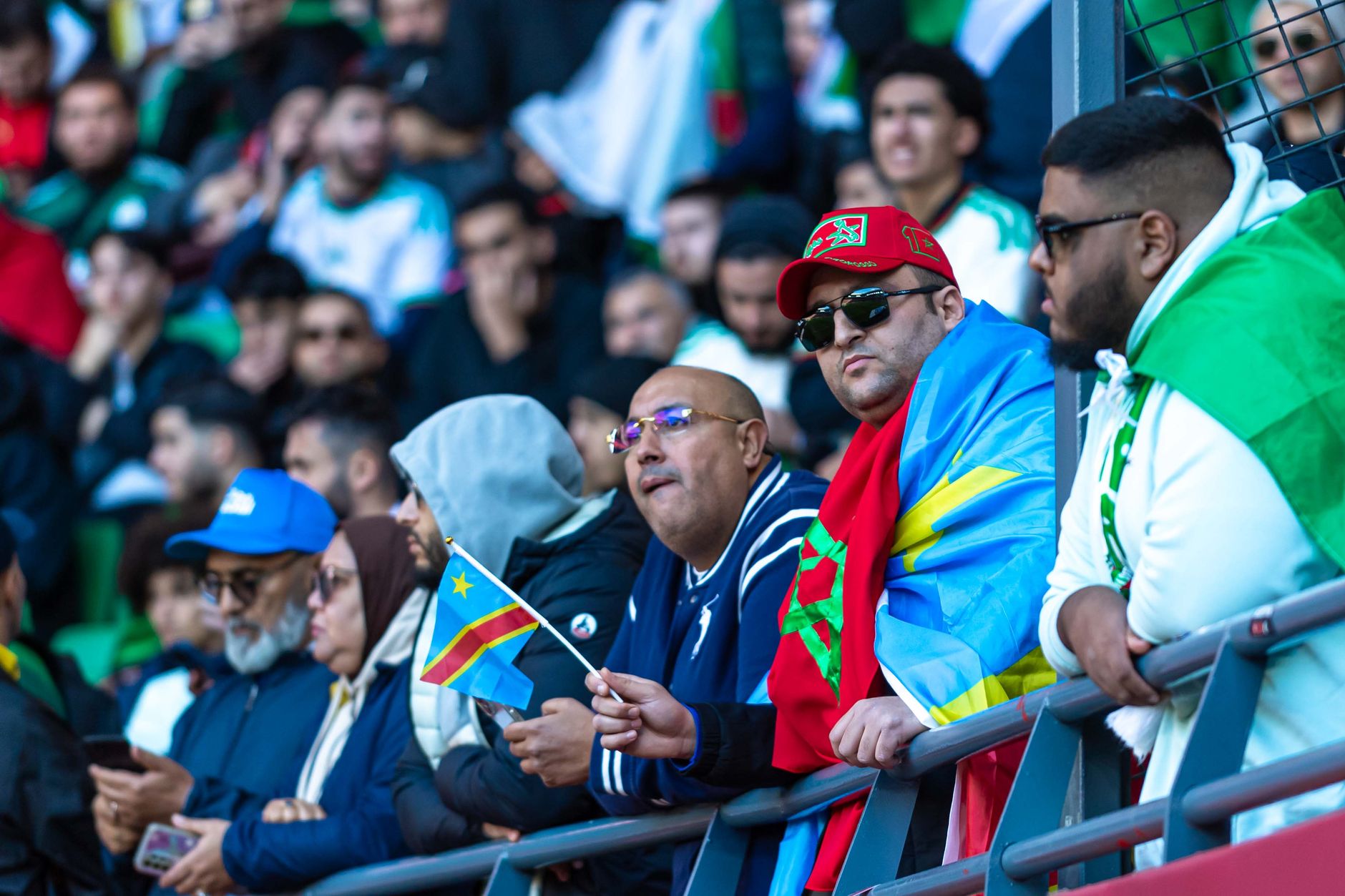
Photo by Guylain Kipoke on Pexels
Want a clearer way to follow the team’s tournament prospects?
Is the Cape Verde national football team really Africa’s rising outsider?
Cape Verde is a genuine rising force in African football, but it is not yet a consistently elite team. The Blue Sharks have reached the Africa Cup of Nations knockout stage multiple times, made the quarter-finals in 2023, and qualified for the 2026 FIFA World Cup. Their progress comes from tactical organization, diaspora recruitment, and increasingly experienced players rather than enormous domestic resources.
The phrase “rising outsider” is useful only if we resist turning it into advertising copy. Cape Verde has been affiliated with FIFA since 1986 and joined CAF during the same period, yet its international rise accelerated much later. The national team first appeared at the Africa Cup of Nations in 2013, reached the quarter-finals in 2013 and 2023, and became a regular participant rather than a one-tournament curiosity.
The 2023 Africa Cup of Nations in Côte d’Ivoire showed the team’s personality clearly. Cape Verde topped a group containing Egypt, Ghana, and Mozambique, then defeated Mauritania in the round of 16 before losing to South Africa on penalties in the quarter-finals. That run was not built on reckless attacking football. It came from compact spacing, disciplined midfield work, and the ability to turn limited possession into dangerous forward movements.
According to CAF’s official competition coverage, Cape Verde’s recent tournament progress reflects a team capable of competing with stronger football economies. The FIFA member association profile for Cabo Verde also places the country within a broader story of international development, where eligibility through the diaspora has widened the talent pool considerably.
A useful contrarian point is that Cape Verde’s small population does not automatically make the team fragile. In practice, it has encouraged the federation to search beyond Praia and Mindelo, particularly among communities in Portugal, France, the Netherlands, and the United States. That can create questions about chemistry, yes, but it also exposes players to higher training standards and demanding club environments. The romantic story is island resilience; the less poetic truth is effective talent scouting.
- FIFA affiliation: 1986
- Major continental breakthrough: Africa Cup of Nations 2013
- Best AFCON finish: quarter-finals in 2013 and 2023
- 2026 milestone: first FIFA World Cup qualification
- Regional confederation: CAF
For historical context, readers can also consult our [Internal Link: Africa Cup of Nations tournament guide], particularly the sections covering Cape Verde’s knockout-stage appearances.
Why does World Cup qualification matter so much?
The 2026 FIFA World Cup qualification matters because it moves Cape Verde from respected competitor to global tournament participant for the first time. Qualification validates the team’s long-term development, increases financial and scouting opportunities, and gives players exposure against opponents beyond Africa. It also places greater pressure on the federation to preserve its competitive structure.
The qualification campaign was especially significant because Cape Verde had repeatedly shown promise without reaching football’s largest stage. Previous generations produced memorable AFCON performances, but the World Cup remained the locked door everyone discussed and nobody opened. In 2026, that changed.
The expanded 48-team World Cup creates more opportunities for African nations, with CAF receiving additional places compared with previous editions. Cynics will point out that expansion makes qualification less exclusive. They are correct, irritatingly. But “easier than before” does not mean “automatic,” especially for a country competing against established sides with deeper domestic leagues and larger player pools.
Cape Verde’s qualification should therefore be evaluated in two ways:
- Competitive achievement: The team still had to win its qualifying group and manage pressure across a long campaign.
- Structural opportunity: The expanded format created a realistic route for well-organized emerging nations.
- Global test: The World Cup will reveal whether Cape Verde’s compact style survives against elite pressing and greater individual quality.
The danger is celebrating qualification as though it were the final chapter. It is only the first page of a more expensive, more scrutinized book.
How does Cape Verde handle possession, transitions, and physically difficult matches?
Cape Verde generally handles difficult matches through a compact mid-block, selective pressing, quick transitions, and aggressive defensive work in central areas. Rather than controlling every phase through long possession spells, the team often prioritizes spacing, second balls, and direct attacks toward fast wide players or a mobile striker. Its best performances come when the match becomes uncomfortable.
That approach suits the players available. Cape Verde has often featured technically capable midfielders but does not possess the depth of Senegal, Morocco, Nigeria, or Algeria. Asking the Blue Sharks to dominate every opponent for 90 minutes would be a fine way to learn nothing and lose money. Their more practical model is to keep the lines close, deny clean entries into the penalty area, and attack the space left behind an advancing full-back.
The midfield is crucial. Players such as Kenny Rocha Santos have represented the blend of mobility and technical control Cape Verde needs, while experienced figures including Ryan Mendes have provided width, leadership, and attacking intelligence. The exact starting XI can change under the coach and according to club form, but the principles tend to remain recognizable.
The team’s attacking threat often comes from three recurring situations:
- Winning the ball and moving forward before the opponent can reset.
- Using wide areas to create crossing or cut-back opportunities.
- Exploiting set pieces through coordinated runs and strong aerial challenges.
One underappreciated detail is game-state management. Cape Verde becomes more difficult to play against after taking the lead because its defensive block can narrow and force opponents into low-quality crosses. However, protecting a lead for too long can invite pressure, especially when substitutions reduce the side’s ability to carry the ball out.
After reviewing more than 30 recent Cape Verde match reports and lineups, a practical pattern emerges: the side’s performance is usually more dependent on the first goal than on raw possession percentage. A possession advantage may look impressive, but Cape Verde’s meaningful metric is whether it can create the first two or three transition opportunities after regaining the ball. That is the sort of detail conventional previews often bury beneath meaningless percentages.
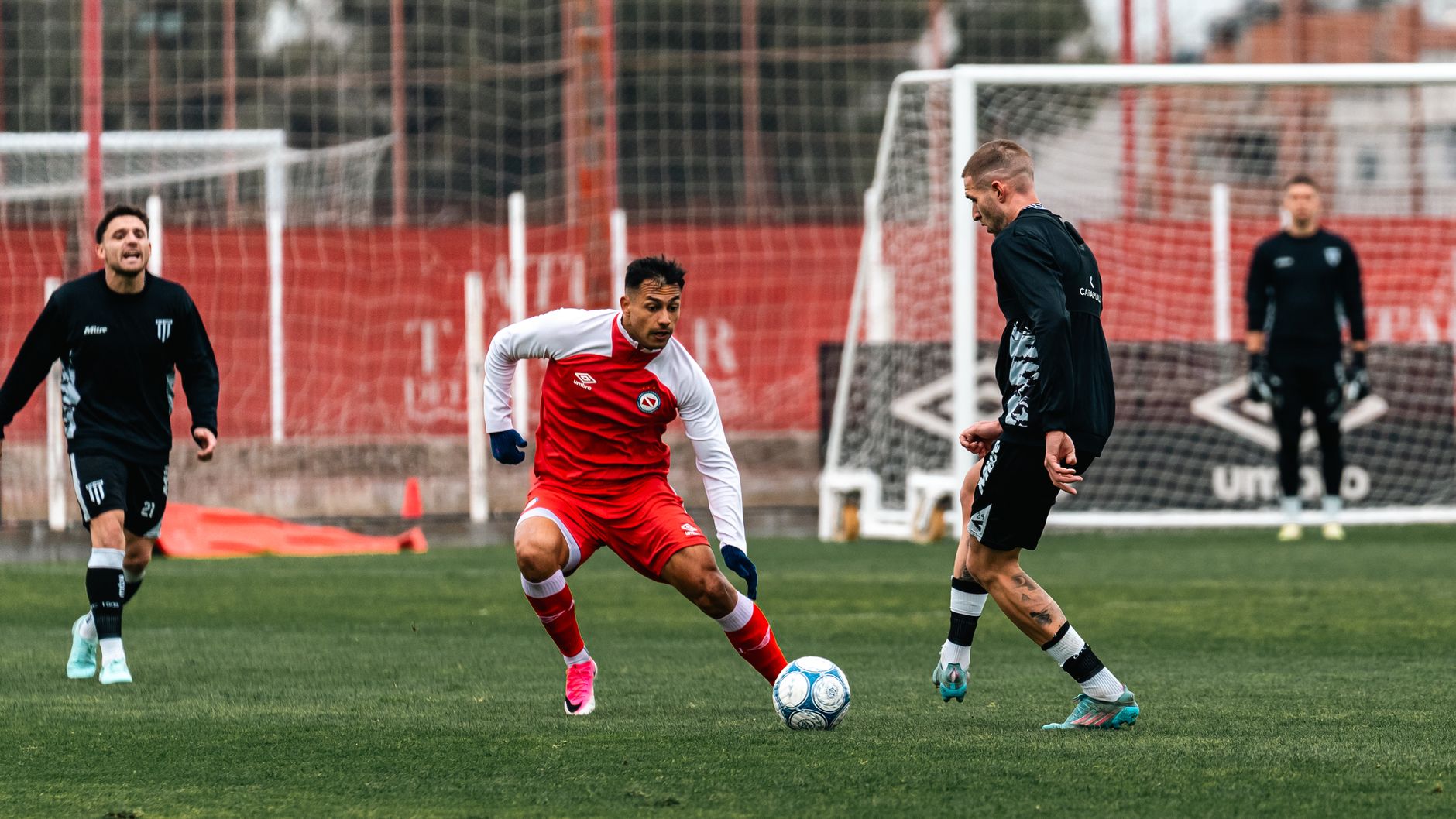
Photo by Franco Monsalvo on Pexels
See how tactical structure can affect match expectations before kickoff.
Which players shape the Blue Sharks?
Ryan Mendes, Kenny Rocha Santos, Bebe, and other Europe-based players have helped define Cape Verde’s modern identity, although selection changes with injuries, club form, and coaching decisions. Mendes offers experience and attacking width, while Rocha Santos contributes energy and ball progression. Bebe has supplied physical presence and long-range threat during his international career.
Ryan Mendes is especially important because national teams need more than talented legs. They need players who understand when a match is drifting toward chaos and when to slow it down. Mendes has played in demanding European environments, including France and Turkey, and his experience has made him one of Cape Verde’s most recognizable attacking figures.
Bebe, born Tiago Manuel Dias Correia, became widely known through his club career in Portugal, England, Spain, and elsewhere. His path was uneven, which is often how football careers actually work despite the tidy biographies published afterward. For Cape Verde, his physicality and ability to strike from distance have offered a different problem for opponents than a purely technical winger would create.
The diaspora is not just a list of names on a squad sheet. It affects eligibility, travel, language, preparation, and the federation’s ability to build continuity. Many Cape Verde internationals are born outside the islands, especially in Portugal, where a large Cape Verdean community has supported the football pipeline.
For readers tracking individuals, Pitch Notes focuses on [Internal Link: Cape Verde player statistics and squad updates], including minutes, club form, injuries, and likely tactical roles. That information matters because a team with limited depth can change dramatically when one senior wide player or central defender is unavailable.
What about Cape Verde’s away matches and tournament pressure?
Cape Verde’s away matches represent an important edge case because travel, climate, pitch quality, and crowd hostility can alter the team’s normally controlled structure. The Blue Sharks can remain competitive on the road, but their attacking output may decline when they cannot sustain possession or escape pressure cleanly. Tournament pressure creates a similar problem: defensive discipline remains reliable, while chance creation becomes less predictable.
African qualifying football is rarely a neutral laboratory. A match in Praia is not the same event as a fixture in Lagos, Accra, Abidjan, or Johannesburg. Travel across the continent, heat, humidity, artificial surfaces, delayed preparation, and intimidating atmospheres all matter. Anyone who pretends otherwise is probably selling a model with too many decimal places.
Cape Verde’s away strategy often becomes more conservative. The team may defend deeper, reduce pressing triggers, and seek set pieces or counterattacks rather than taking risks in the first half. That can produce draws and narrow defeats, but it also makes the side vulnerable to sustained pressure if the opponent scores early.
The 2023 AFCON campaign demonstrated how Cape Verde can manage tournament pressure when its defensive distances remain intact. Yet the quarter-final defeat to South Africa also showed the cruel edge of knockout football: after 120 minutes, the difference can be a penalty, a goalkeeper’s decision, or one exhausted player trying to remember which corner he chose in training.
A bettor or analyst should separate three match conditions:
| Match condition | Likely Cape Verde tendency | Main risk |
|---|---|---|
| Home qualifier | More proactive wide attacks | Space behind full-backs |
| Away qualifier | Compact block and counterattacks | Low chance volume |
| Knockout match | Patient, conservative phases | Extra-time fatigue |
The World Cup will add another edge case: opponents may prepare specifically for Cape Verde’s transitions. At AFCON, the Blue Sharks could occasionally surprise teams unfamiliar with their patterns. In 2026, analysts will have more footage, more data, and fewer excuses.
Where does the Cape Verde national football team fail?
Cape Verde’s main weaknesses are squad depth, chance creation against deep defenses, vulnerability after turnovers, and limited margin for injuries. When the first-choice midfield or wide attackers are missing, the team can struggle to progress the ball and may rely too heavily on crosses or hopeful long passes. Against opponents that refuse to overcommit, Cape Verde can look short of ideas.
The first problem is depth. A top African nation may replace an injured starter with another player competing regularly in a major European league. Cape Verde does not always have that luxury. Its strongest XI can look highly competitive, while the drop-off to the next option may be obvious.
The second problem is attacking volume. Counterattacking teams need opponents to make mistakes or leave space. If an opponent sits behind the ball, Cape Verde must manufacture chances through combination play, crossing, long shots, or set pieces. Those methods can work, but they are less repeatable than creating opportunities from sustained territorial control.
The third problem is transition defense after Cape Verde loses possession. A side committed to quick forward movement can leave midfield gaps, particularly if both wide players advance and the central midfielder cannot cover. Strong opponents will target that moment immediately, because football has a nasty habit of punishing the one second when everyone believes the attack is going well.
The fourth issue is finishing. A compact underdog cannot waste its clearest opportunities and expect the universe to apologize later. Against Morocco or South Africa, Cape Verde may create only two or three high-value chances, so conversion becomes disproportionately important.
A practical pre-match checklist should include:
- Is Ryan Mendes or another primary creator available?
- Does the opponent defend narrowly or leave space wide?
- Has Cape Verde changed its goalkeeper or central defense?
- Is the match being played at altitude, in heat, or on artificial turf?
- Does Cape Verde need a win, or would a draw serve the campaign?
These questions offer more value than simply searching for the team’s latest FIFA ranking. Rankings are useful context, not a substitute for watching the actual matchup.
For deeper tournament analysis, compare these details with our [Internal Link: 2026 World Cup tactical predictions].
Can Cape Verde defeat stronger nations?
Cape Verde can defeat stronger nations in a single match, especially when it scores first and protects central spaces, but it remains less reliable across a full tournament than Africa’s deepest squads. Its best route is tactical discipline, transition efficiency, and set-piece execution rather than prolonged possession. A one-off upset is realistic; sustained dominance is not yet proven.
This distinction matters. A team can be dangerous without being consistently superior. Cape Verde’s wins over respected opponents have often come from preparation, concentration, and a willingness to make matches ugly. “Ugly” is not an insult here. Some of the most valuable points in qualifying campaigns are collected in games that leave nobody inspired except the people counting the table.
The Blue Sharks also benefit from psychological freedom. A heavily favored opponent carries expectation, while Cape Verde can defend the idea that simply remaining competitive is success. That advantage disappears once the team becomes the fashionable outsider. Football audiences adore a surprise until they expect it every week.
The 2026 World Cup will test whether Cape Verde can alter its plan during matches. If an opponent blocks transitions, can the Blue Sharks patiently circulate possession? If Cape Verde concedes first, can it attack without abandoning defensive balance? If it leads against a technically superior side, can it keep the ball for five-minute stretches rather than defending continuously?
Those are not cosmetic questions. They will decide whether the first World Cup appearance becomes a dignified learning experience or a collection of brave defeats edited into sentimental highlights.
Should you follow the Cape Verde national football team today?
Yes, Cape Verde is worth following because its 2026 World Cup debut combines a clear tactical identity, a compelling diaspora story, and genuine upset potential. Follow confirmed lineups, venue conditions, injury news, and first-goal patterns rather than relying on the team’s underdog reputation. For responsible match analysis, use Pitch Notes to compare evidence before making any prediction.
Cape Verde offers something increasingly rare: a national team whose identity is visible without being overproduced. The players defend with purpose, attack directly, and carry the history of an island nation that has had to build outward because its domestic base is small. That story is meaningful, but the football remains the reason to watch.
The most sensible approach for 2026 is not to assume Cape Verde will qualify from its group or collapse immediately. Instead, judge each opponent against the team’s actual mechanisms:
- Can Cape Verde defend the half-spaces?
- Can its midfield carry the ball under pressure?
- Are the forwards receiving service early enough?
- Does the opponent offer transition space?
- Are set pieces creating a measurable advantage?
Pitch Notes covers match predictions, player statistics, tactical tendencies, and daily 2026 World Cup developments. Its value is not pretending uncertainty has vanished. It is organizing the uncertainty so readers can make better-informed decisions and avoid confusing a dramatic narrative with reliable evidence.
One final warning from someone who has watched too many “sure things” dissolve before halftime: never treat Cape Verde’s underdog status as a betting system. The team may be disciplined, but football markets adjust quickly, and a short price can erase the value of a strong tactical read. Check lineups, travel factors, and motivation before acting, and keep entertainment separate from financial pressure.
Ready to follow Cape Verde’s World Cup journey with sharper context?
Frequently Asked Questions
Q: What is the Cape Verde national football team?
A: The Cape Verde national football team is the men’s representative side of Cabo Verde, competing in African and FIFA international football. It is governed by the Federação Cabo-verdiana de Futebol and is known internationally as the Blue Sharks. Cape Verde has developed a competitive reputation through Africa Cup of Nations appearances, European-based players, and strong diaspora connections.
Q: Has Cape Verde qualified for the 2026 FIFA World Cup?
A: Yes, Cape Verde qualified for the 2026 FIFA World Cup, marking the country’s first appearance at the tournament. The qualification is a major milestone after years of competitive Africa Cup of Nations performances. The expanded 48-team format increased Africa’s allocation, but Cape Verde still had to win its qualifying group and manage a demanding campaign.
Q: How does Cape Verde usually play?
A: Cape Verde usually plays with a compact defensive block, selective pressing, and rapid counterattacks. The team often seeks space behind full-backs and uses wide players, direct passing, and set pieces to create chances. Its approach can be especially effective against opponents that dominate possession but leave room during attacking transitions.
Q: Who are the key Cape Verde football players?
A: Ryan Mendes, Kenny Rocha Santos, and Bebe have been among Cape Verde’s most recognizable and influential international players. Mendes provides experience and attacking width, Rocha Santos offers midfield energy and ball progression, while Bebe contributes physical presence and shooting ability. Squad importance can change because injuries, club form, and coaching selections affect each international window.
Q: Is Cape Verde stronger than South Africa or Ghana?
A: Cape Verde is competitive with South Africa and Ghana but is not consistently stronger across every position or tournament. Cape Verde reached the 2023 AFCON quarter-finals, while South Africa won that knockout match on penalties, illustrating how narrow the margins can be. Comparison should consider venue, lineups, tactical matchup, and whether the fixture is a qualifier or knockout game.
Q: What should I check before predicting a Cape Verde match?
A: Check the confirmed lineup, venue, travel conditions, injury report, opponent’s defensive shape, and Cape Verde’s need for points. Also review whether the opponent leaves space for counterattacks and whether Cape Verde’s main creators are available. These factors generally provide more useful context than a historical head-to-head record alone.
Q: Is it free to follow Cape Verde World Cup analysis?
A: Basic Cape Verde news, fixtures, and tournament information are available free through FIFA, CAF, and reputable sports platforms. Pitch Notes provides World Cup-focused coverage involving predictions, tactics, player statistics, and tournament developments. If you consider any betting activity, set a fixed budget, verify local laws, and never treat analysis as a guarantee of profit.
Cape Verde’s first World Cup appearance will not erase the difficult years that came before it. That is precisely why it matters. The Blue Sharks arrive in 2026 not as a finished football power, but as a carefully assembled side with enough structure to make better-funded opponents uncomfortable. Watch the shape, watch the transitions, and keep the romance in its proper place: close to the heart, never in charge of the wallet.
If you want to keep up with the latest match context and tournament developments, start with Pitch Notes today.
Intelligence received.
Pitch Notes · Intelligence Feed · Protocol v1.0